
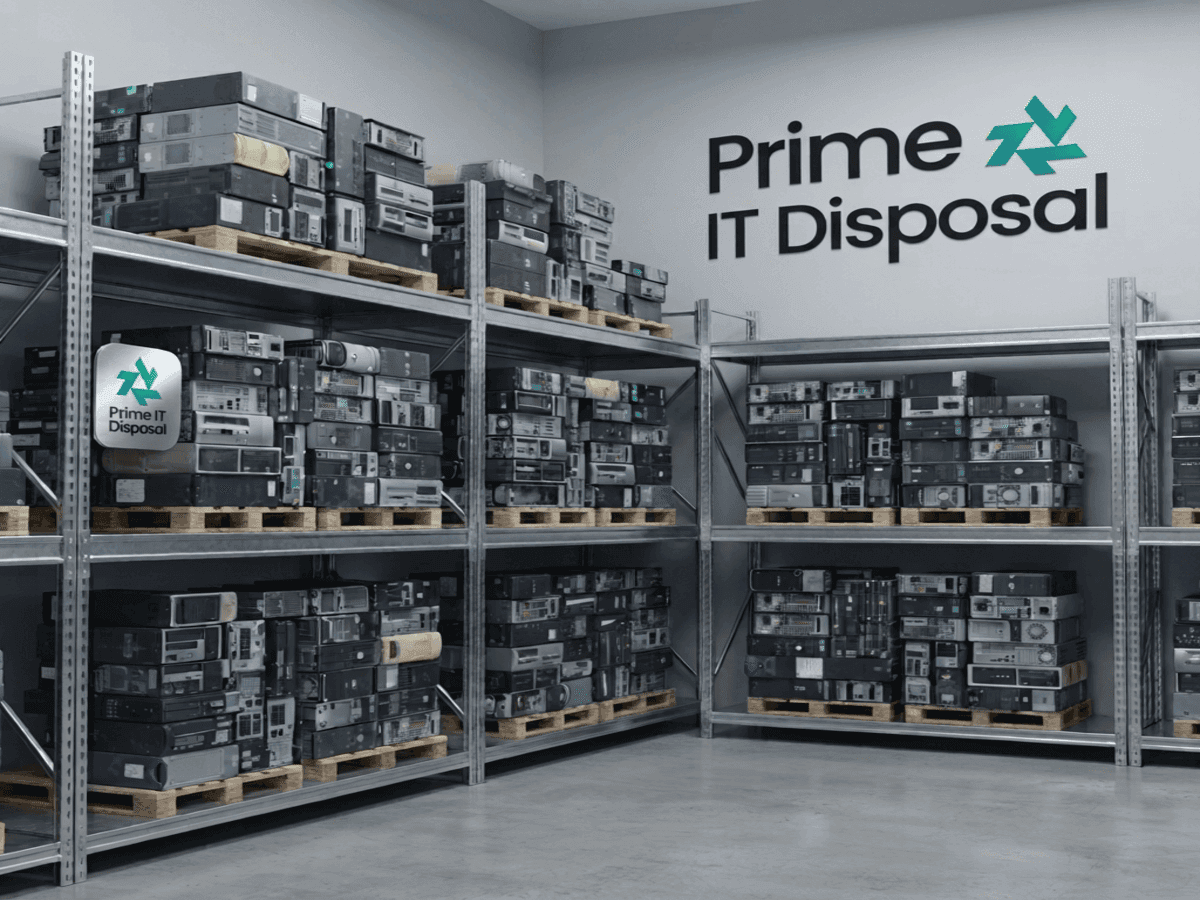
IT disposal pricing confuses people because the answer genuinely does swing between 'we'll pay you' and 'this will be an invoice' — sometimes for two collections from the same organisation in the same year.
This guide sets out what actually drives that, so you can tell a fair quote from an expensive one.
The three things that set the price
Strip away the packaging and every ITAD quote is balancing the same three variables.
1. Residual value of the equipment
Equipment that can be refurbished and resold has value. A business laptop three or four years old with a working screen and battery has real resale demand. A fifteen-year-old CRT monitor has negative value — it costs money to process and contains hazardous components.
This is the single biggest swing factor. A collection of recent laptops can generate a meaningful rebate; the same volume of ancient desktops and monitors will be chargeable.
2. Cost to collect
Distance, access and volume. A palletised load from a ground-floor unit off a main road is cheap to collect. Forty items carried down three flights of stairs from a city centre building with a booked loading bay is not, regardless of what the equipment is worth.
3. Cost to process
Verified erasure, itemisation, certification and compliant recycling all take engineer time. So does on-site destruction, which requires equipment and staff to travel to you. The more evidence you need, the more processing sits behind it.
When collection should be free
For a typical business collection — a reasonable volume of mixed but not ancient IT, at an accessible site, on mainland UK — collection should not cost you anything. The residual value in the load covers the collection and processing.
As a rough guide, free collection is normal when:
- The load includes a reasonable proportion of laptops, desktops or servers from the last six or seven years
- The volume justifies a vehicle — typically upwards of ten to fifteen items
- The site has normal vehicle access and no unusual handling requirements
- Standard off-site processing with per-device certification is acceptable
When there will be a charge
A quote comes back chargeable when the processing cost exceeds the value in the load. The usual causes:
- CRT monitors and televisions — hazardous, heavy and expensive to process
- Very old equipment with no resale demand at all
- Small collections that still require a dedicated vehicle journey
- On-site destruction, which is a specific service with its own cost base
- Difficult access — upper floors without lifts, restricted timed slots, out-of-hours working
- Dismantling, de-racking or decommissioning work performed on site
How rebates should work
Where equipment has resale value, you should see it. A rebate arrangement worth having has three characteristics:
- 1It is reported per asset, so you can see what each item achieved rather than receiving one aggregate figure.
- 2It is net of clearly stated processing costs, so the deduction is visible rather than embedded.
- 3It arrives with the asset register, so it reconciles line by line against what you handed over.
If the rebate is a single number on an invoice with no breakdown, you have no way to tell whether it reflects what your equipment was worth. For public sector and regulated organisations, that lack of visibility is a value-for-money problem in its own right.
The costs that catch people out
When comparing quotes, check specifically whether these are included or extra:
- Per-serial destruction certificates — some providers charge per certificate, which makes a cheap headline rate expensive at scale
- Itemised asset reporting, as opposed to a box count
- Data destruction for printers, copiers and embedded storage devices
- Removal of equipment from racks, desks or walls
- Waste transfer and consignment documentation
- Waiting time where site access is delayed
The pattern to watch for is a low collection price with the compliance evidence priced separately — because the evidence is the reason you engaged an ITAD provider rather than a scrap merchant.
Frequently asked questions
Where the equipment has resale value, yes — net proceeds are returned to you and reported item by item. Whether a specific load generates a rebate or a charge depends on its age, mix and condition, which is what the quote establishes.